Some Things to Think About

|
For many years, I had a ganglion cyst (a fluid filled bump) on my wrist. And it got to be quite large. It made placing my hand, palm down, painful. I went to a hand specialist who, using a needle, shrunk the thing by draining the fluid out of it. But it came back bigger than ever.
With my only other medical option being surgery, I decided to talk to it. Over a period of days I asked the ganglion questions, listened, then wrote down whatever came to mind. What came was interesting but never curative. Until one day, the ganglion "spoke" of me trying to protect myself. That afternoon, I gained insight about my skewed thinking regarding my "need" to protect myself in life. Suddenly energized and inspired, I closed my notebook, grabbed my camera, and went out to take some pictures (I was into photography at the time). I had just crossed the street from my apartment building when I slipped and fell on some ice. I put my left hand out to break the fall and over the next days, the cyst disappeared, never to return. We teach each other that we need to protect ourselves. Sometimes we do - mostly, though, we try to protect ourselves from being hurt emotionally because we believe circumstances and people can do that to us. In truth, we have much more control over how we feel than anyone or anything else does. I aspire to think of myself as ultimately un-hurtable rather than vulnerable and in need of protection. I would rather invest my energy in trusting my ability to bounce back than in trying to protect a breakable notion of who I am. Sometimes a fall helps us bounce and get the leverage to get where we've been wanting to go. Falls can help us release what we don't want and get closer to what we do want. But we must trust in our reslience. Love, Jen
2 Comments
I was watching Say Yes to the Dress the other day. I recognize that watching women shop for wedding gowns could easily be judged as vacuous and pointless. I do not watch it for enrichment purposes or artistic interest; yet some how, I always, learn from it. Here's what I learned this last time.
There was a young woman, a lawyer in the making, who had been to five shops previously, unable to find the "perfect" dress. As she tried on her new options, she seemed to really like them all. Yet as time passed, she became more uncertain and spoke of feeling confused. The seasoned sales people knew she was analyzing her options too much; they wanted her to feel her way to her answer. Using her intellect to compare and contrast and comb through the details of every dress was only getting her in deeper. She had to withdraw from making arguments for and against, and simply tune to how she was feeling. Once she did that, her answer was clear and she felt the reassurance she had formerly been seeking through her analytical mind (a mind unsuitable for this task). If I am feeling confused, insecure, and uncertain, my thinking has gone into an intense mode that is not serving me. The wheels are turning in my brain but they're not propelling me anywhere. The bottom line is: the "perfect" decision is only ever the one that feels best. I have experienced the vortex of mental despair that pulls me down while trying to smartly arrive at the right choice. I have also experienced the great relief of saying "yes" to and going with the good feeling when it comes, no longer weighing pros and cons or questioning my choice. It's nice to let myself be happy with whatever I decide instead of backwardly making the thing be responsible for my happiness. There is no perfect anything, it is the act of saying "yes" wholeheartedly that makes something seem perfect. Lots of love, Jen I recently saw an (older) interview with Conan O'Brien. He spoke of his show's rehearsals and the creative process.
. . . We are figuring it out up until the last second. We are replacing jokes; we are completely shifting the order; we're chopping things in half; we're cutting things; we're completely writing a new ending. . . .You don't know; comedy's not a science. Science isn't a science - we're learning that all the time. I mean, nobody . . . nobody knows really what they're doing. They don't! They don't know what they're doing and there's two ways to go with that information. One is to be afraid and the other is to be liberated - and I choose to be liberated by it. There are so many times in writing and drawing that I feel I don't know what I'm doing; sometimes I don't mind and sometimes I see it as a problem. If I place my trust and interest in my ability to find and experiment my way through, I feel much better than if I keep searching my brain for answers. The creative process is dynamic; it's not an unchanging to-do list checked off bit by bit. It's interactive, relational. The truth is I never know all the specifics of how to bring my project together (whatever it is) at the start. We simply cannot plan for discovery - and that's a good thing. Through involvement, the process unfolds and new things are revealed. But because so much new is coming, the knowing arrives moment to moment and departs regularly. We don't need to know what we're doing (in terms of all of the specifics) to create what we want - we only need to know the feeling of the direction we wish to head. Not knowing can be seen as a problem - leaving us feeling lost and anxious. Or not knowing can be seen as the natural place we all must stand in order to receive and discover the new . That's the exciting part of creating - the new and the next. Love, Jen “Everything can be taken from a man but one thing . . .—to choose one’s attitude in any given set of circumstances, to choose one’s own way."
~Viktor Frankl My son and I have been debating something lately. It's about choice. He argues there are areas in which he has no choice. I say we always have some form of choice - which is all that's needed. In his lifetime, he has received a few diagnoses, including Autism. When he's engaged in what are considered autistic behaviors - like being deep in his own thinking, thinking aloud, or running back and forth repeatedly, he sometimes feels he has no choice. The momentum of his thoughts and the momentum of the behaviors that follow those thoughts is strong. So, he feels he needs something external to jolt him out of it (like me mentioning Doritos, which always gets his attention). But my son's the only one who can shift his own focus. Regardless of what triggers the decision - he's still the one at the wheel, making the choice. If a person doesn't perceive his choices, he can't consciously make new ones. So how do we learn to see choices that are, in the moment, invisible to us? I've come to see choice as like a muscle. We usually think of choices as options outside us. But I think we are able to perceive choices only to the degree we've developed this choosing muscle. As we become conscious, purposeful, and deliberate in our choices - small as they might be - the muscle grows and our awareness and ability to perceive options increases. Perception of choice is central to our sense of power. Just because a person isn't aware he can choose, in this moment, doesn't mean his perception can't change in the next. With new perception comes new awareness of our capability to create what we want, starting with a choice. Lots of love, Jen I watched a fashion program in which a woman, almost constantly mistaken for a man, got a makeover. When I saw her, I assumed her look was desired and intentional. The oversized men's clothing, the way she wore her hair - it all seemed to point to conscious choice and intention. But as it turned out, this wasn't true.
As she spoke about years of feeling misunderstood, not seen for who she really was (including gender and temperament), I realized how skewed my perception was. She wanted to read as female. Yet almost every choice she was making contributed to the misunderstanding, locking her in an experience she didn't want. But she couldn't perceive her choices nor feel her capacity to make new ones. Through her thinking, she felt powerless to have what she wanted. Her mind wasn't free; it was habitually feeding painful patterns of thought about what she could or couldn't be. It took other people to help her see that what she wanted she could have, if she allowed it. She could be who she was - all of it - with her masculine and feminine qualities - and authentically express herself. What if we can have what we want but we're simply not seeing the choices before us? Lots of love, Jen Recently, I received a call from a "government official". Though it seemed dodgy, I picked up in the middle of screening because there was mention of notifications to which I had not responded. Having a husband who sometimes unwittingly throws needed/wanted things away, it was conceivable something might have been overlooked.
The man on the line had an East Indian accent. He told me his name was Ryan Wilson and rattled off his government ID number. When I asked for the details of my "case", he gave me another phone number. Though it was all unlikely my adrenaline was triggered, leaving me feeling I better attend to something. So, I called just in case. This man also sounded Indian. Apparently I had committed tax fraud. Now, I start to play and ask what will happen to me. He tells me I will go to jail. I suggest this is a scam. He says, “What do you mean a scam? I am a government official!” I am curious about where the conversation will go. How will he ease into asking for my credit card? He warns again that I will go to jail. “When?” I ask. “Today.” “So, you’re just calling to let me know the police are coming for me?” “Yes." “When will they come?” “In forty-five minutes.” “Really - they’re coming in forty-five minutes” I say, “And when will they be coming for you?” He thanked me, I thanked him, and we hung up. What interested me was how he hooked me in with a scary story even though I knew better. The thought that I’d possibly done something wrong was compelling. By the time I’d finished engaging with that thinking, I was a bit shaken even though none of it was real. We all run scams on ourselves, sometimes we question them and sometimes we buy in. Often we think it’s reality - we’re not making the news, we’re reporting it. There are many stories playing in our heads throughout a day and we determine which ones we let run and effect us and which we put an end to, finally calling a scam a scam. It's good to put an end to scary stories. Why waste our time? Love, Jen Once you label me you negate me.
~Soren Kierkegaard Years ago my youngest son's elementary school teacher approached me at a school function and in the short time we spoke our disagreement was clear. Despite all the quirks in his behavior, regardless of his behavior having been diagnosed on the Autism Spectrum, I saw my son as having the power of choice and she didn't. We're sort of taught to see people with conditions and "disorders" this way. Instead of focusing on the control and choice they do have, we focus on the abilities they are not currently exhibiting. We focus on the "deficit", on the part "ordered" differently (than the majority) that we don't understand. But I'd seen him suddenly focus when asked if he wanted ice cream. I'd seen him follow sixty some pages of Lego instructions to create the toy of his dreams; I'd seen him both purposeful and deliberate in his intentions and expressions. I'd seen the eye contact, the compassion, and felt the emotional exchange. For me, there was plenty of evidence of an independent thinking, genius, choice-making individual. Though his presentation was atypical often, though he wasn't focusing on what others wanted him to, he was making choices. If we take that from an individual, in our attempts to explain or help him, we've ceased truly seeing him or his potential. When we see a boy running back and forth, talking to himself and flapping his hands, we assume he has no choice because if he did, he would choose differently. And often, those running do not perceive their choice (at those moments) but behavior always follows perception and the evolution of new perception is always possible and natural. In the eyes of his teacher, she was showing him compassion. From her vantage point, he was afflicted with a condition. To acknowledge his power of choice would seem to be insensitive. But in her misunderstanding of compassion, she was seeing only the choices he wasn't making. Acknowledging a person's power of choice may seem like blaming the victim. But if we deny another's ability to choose or learn they can choose, we deny the individual's creative power - a plight far worse than any condition, disorder or disease. Though it may seem compassionate, seeing anyone as diminished or incapable, regardless of their current situation, in no way serves them. It only threatens to convince the person of his lack of power and keeps his remarkable potential hidden. Love, Jennifer I am tired of trying. The other day while exercising I realized there is a great difference between trying to do a specific movement and just bringing my full attention to it. In fact, trying feels like it is in a whole other realm - The Realm of Futile Effort.
Though trying can refer to giving something a go as in "Try it!", it is often lived as "Try harder!". And this, mostly self-inflicted directive, is all about mental straining - extraneous thinking that only serves to deplete our energy. When I work out and bring my full attention to what my body is doing, without assessment or judgment, I feel good. When I try hard, I am thinking in overdrive and I feel uncomfortable. This applies to everything I do. It's even applicable when all I'm doing is thinking; I can allow my thoughts to flow or I can overwork them - also known as worrying. Life coach and writer Michael Neill has an insightful way of talking about this kind of trying; he says it indicates we're attempting to do something that is "not our job". We don't HAVE to think about things that have no real point, over which we have no control, or in ways that spin us out. Those taxing, repetitive thoughts easily come to feel like a full time job. And that's not the job any of us are here to do. Lots of love, Jen I was feeling bad and considered how I would like to feel instead. Turns out I wanted the feeling of looking forward. To what? It's not so much about The What, it's more just a rumbling of anticipatory enthusiasm.
I considered the literal meaning of, "look forward" (as opposed to look backward) and how it is equated with a positive state of mind. There is nowhere else to go but forward in our lives, after all, so it's probably a good idea to look in that direction. Mostly we tend to look forward to something - like a treat, a party, a vacation. This may be to try and summon enthusiasm for getting up (or getting through) each day. But I want to have the feeling without the condition. We speak of regression, backsliding, and things getting worse but in actuality, we are always going forward. Even what seem like setbacks remain part of a greater movement forward. When we "look forward", we are purposefully joining our inevitable movement in that direction, our natural destiny. We're actively feeling good about where we're going. We are in agreement with the natural flow. And that alone, is enough; the mental stance is the win, better than any vacation. Joining the natural direction of life (it's never backwards) feels a lot better than holding back, trying to control, or resisting anything. So, the next time I am down the first thing I'll do is check to see which way I'm facing. And then I'll allow myself to join the Me moving ahead, creating her (always) new life - moment to moment. Which way are you facing? Love, Jen I recently watched a Nova documentary entitled, The Fabric of the Cosmos in which they discuss what we used to think of as empty space. As it turns out, instead of being empty, physicists believe it's more like fabric - an elastic, relatable field that holds, supports, stretches, morphs, and who knows what else. In the documentary, they explain a theory of how the moon revolves around the earth. In a graphic, they show the earth seemingly resting in what reads as the changing "surface" of space. The earth's presence creates an "indentation" or depression in this field which then the moon is drawn to rolling into and around. 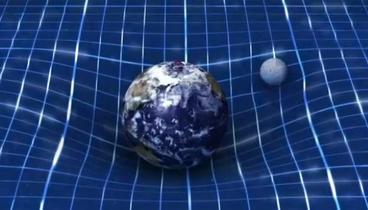 The Moon orbiting Earth (Nova's "The Fabric of the Universe") So, while I was doing some yoga this morning, I found myself considering the space around me and wondering if rather than solely holding myself up, if I was actually being supported as well. Are things unseen conspiring to keep me in my orbit too?
I like the notion of empty space not being empty at all. Even when my life isn't going the way I like, if I let my thoughts settle, I can feel some sense of unidentifiable support around me. There are innumerable things that could play out in my life, including those of which we've been inspired to fear or look forward to. There are diseases, auto accidents, love relationships, new life, new opportunities but I believe there is something about this un-seeable field, which remains constant, that will always hold me, regardless - and you as well. Lots of love, Jen |
From the Inside
|
 RSS Feed
